

shahid
seo analyst
21 July 2026
5 read
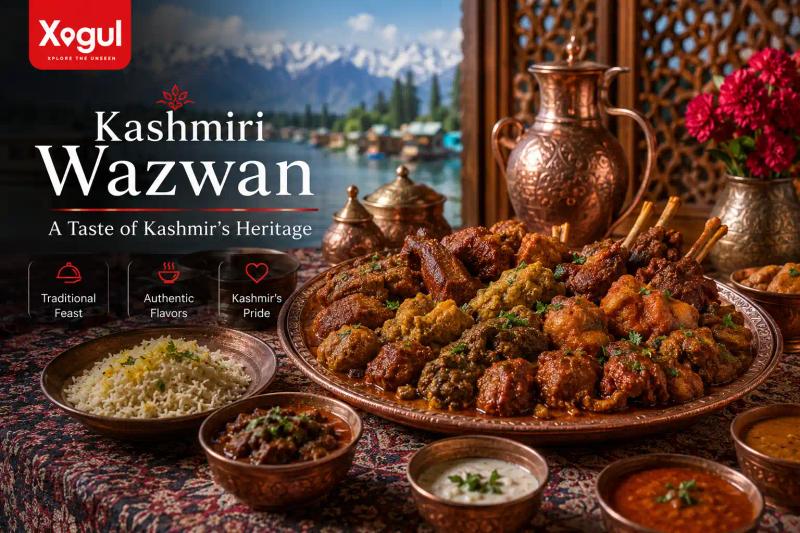
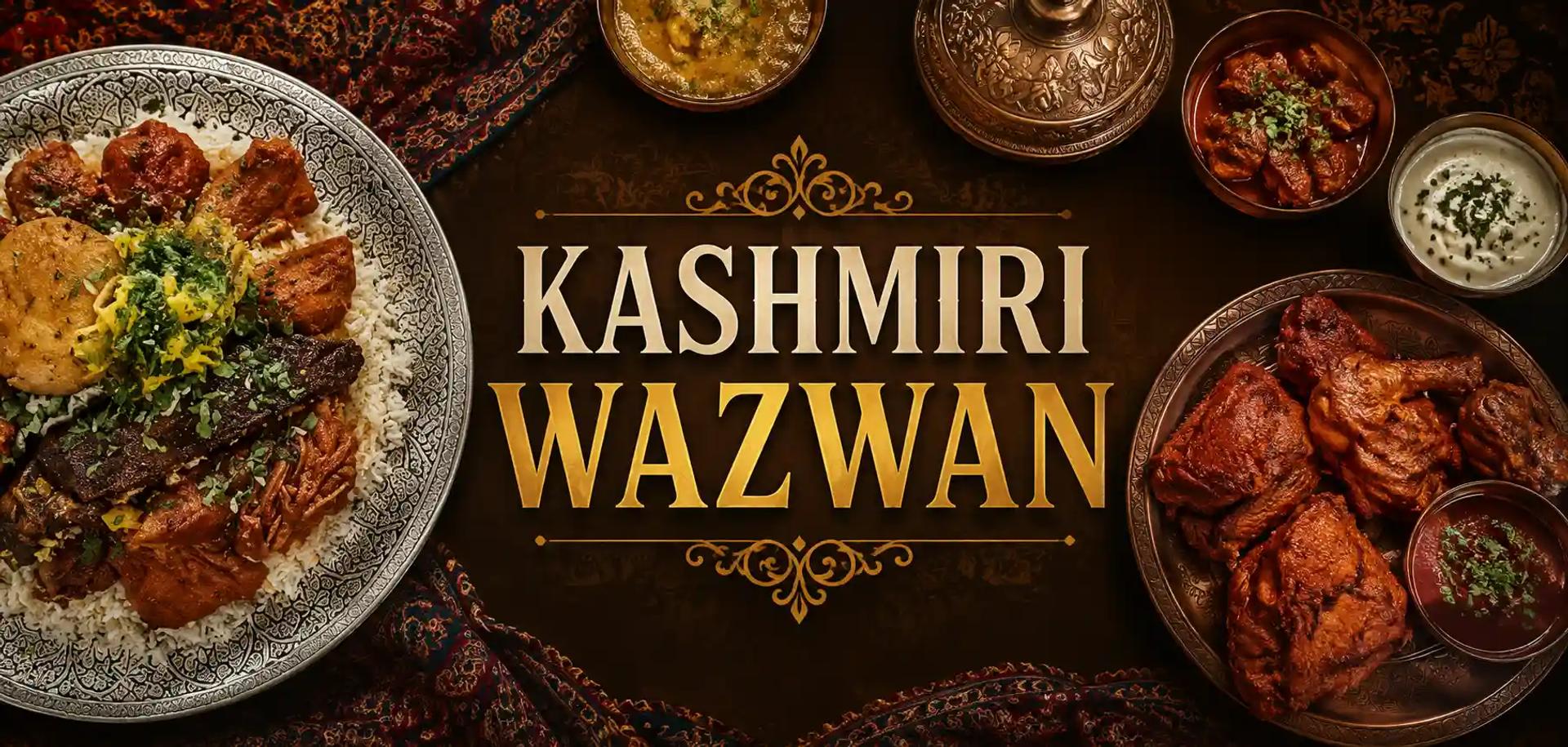
Kashmiri Wazwan is a traditional multi-course feast native to the Kashmir Valley, typically featuring 15 to 36 meat-based dishes served on a shared platter called a trami. Rooted in Central Asian and Persian culinary influence, it's usually prepared for weddings and special occasions, though several Srinagar restaurants now serve smaller Wazwan-style meals year-round for travelers who want a taste without attending a wedding.
Introduction
The first time I sat down to a proper Kashmiri Wazwan spread in Srinagar, I remember being handed a plate the size of a small table and thinking there was no way I'd make it past course four. I didn't. Nobody really does. That's sort of the point.
Kashmiri Wazwan isn't just a meal — it's a piece of the valley's identity, shaped by centuries of Persian and Central Asian influence and passed down through generations of Kashmiri cooks called wazas. If you're planning a trip to the valley, understanding Wazwan and Kashmiri cuisine more broadly will change how you experience the region, whether you're there for the mountains, the lakes, or simply the food itself.
This Kashmiri food guide breaks down what Wazwan actually is, which Wazwan dishes to look out for, where to eat it, and how to enjoy it without any of the confusion that trips up most first-time visitors.
What Exactly Is Kashmiri Wazwan?
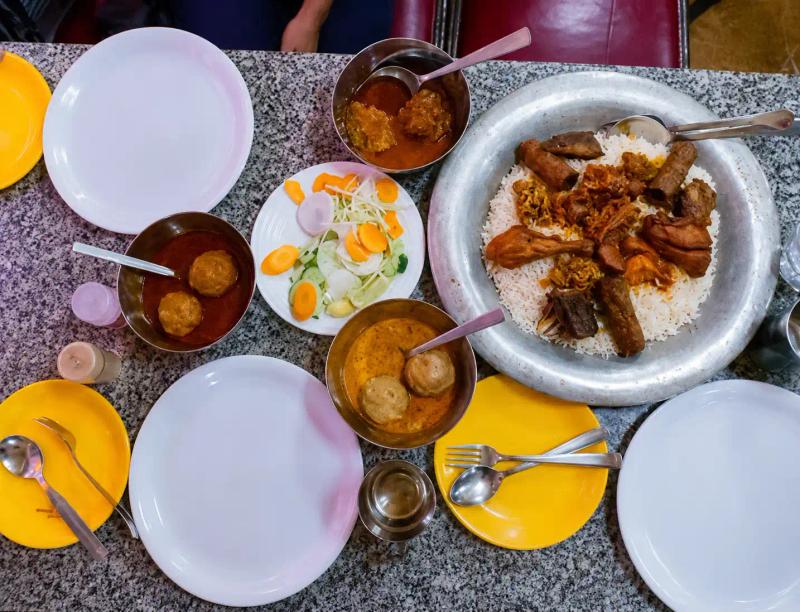
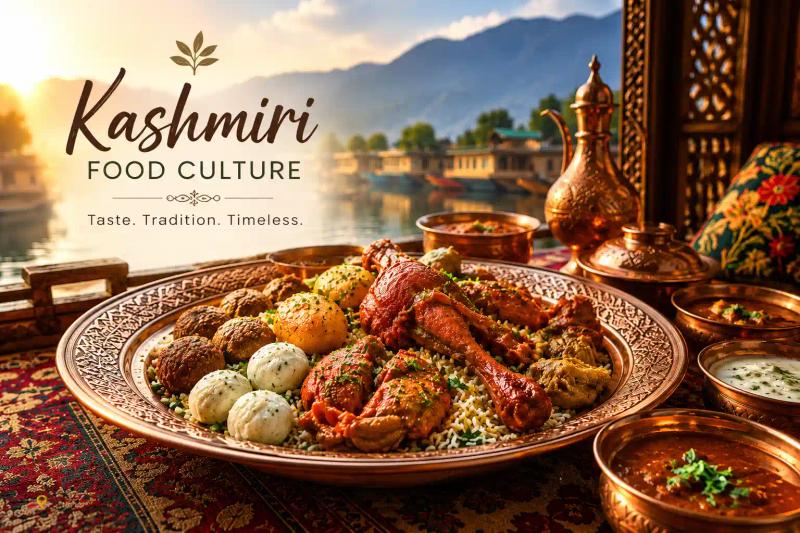
Wazwan is a ceremonial, multi-course Kashmiri feast made up almost entirely of meat dishes, traditionally cooked by a team of chefs called wazas and served on a large communal platter shared between four people.
The word itself comes from "waz" (cook) and "wan" (shop or craft), referring to the culinary tradition rather than a single dish. A full wedding-style Wazwan can include anywhere from 15 to 36 courses, though the number has become a bit of a status symbol over the years. Each dish is cooked slowly, often over hours, using a mix of spices that lean warm and aromatic rather than fiery — think fennel, ginger powder, and dried Kashmiri chillies for color more than heat.
What surprises most travelers is the format. Everyone eats from the same large copper platter, called a trami, seated on the floor around it in groups of four. It's communal by design, and that shared-plate structure is part of what makes it feel different from traditional Kashmiri food served at a regular restaurant table anywhere else in India.
The History Behind Kashmiri Wazwan
Food historians generally trace Wazwan's roots to the 15th century, when Central Asian and Persian influence entered the valley through trade routes and migration. The wazas who cook it today are believed to descend from cooks who originally came from Samarkand, and many families still pass the craft down through generations rather than through formal culinary schools.
What's interesting is how little the core techniques have changed. The slow-cooking methods, the use of curd-based gravies, and the reliance on whole spices rather than powders are all preserved almost exactly as they were centuries ago. It's one of the clearer examples of a living food tradition rather than a reconstructed one.
Signature Dishes You Need to Know
A typical Wazwan menu can include over 30 dishes, but a handful of Wazwan dishes show up in nearly every spread and are worth knowing by name.
| 🍽️ Dish | 📖 What It Is | 🌶️ Flavor Profile |
|---|---|---|
| Rogan Josh | Slow-cooked lamb in a rich red aromatic gravy. | Rich, warm, mildly spiced |
| Rista | Minced meatballs cooked in a traditional red gravy. | Soft, delicately spiced |
| Gushtaba | Minced meatballs served in a creamy yogurt-based gravy. | Creamy, tangy, mild |
| Tabak Maaz | Traditional fried lamb ribs with a crispy finish. | Crispy outside, tender inside |
| Yakhni | Tender meat simmered in a curd-based sauce. | Light, tangy, fennel-forward |
| Kabab (Seekh) | Skewered minced meat grilled over charcoal. | Smoky, well-spiced |
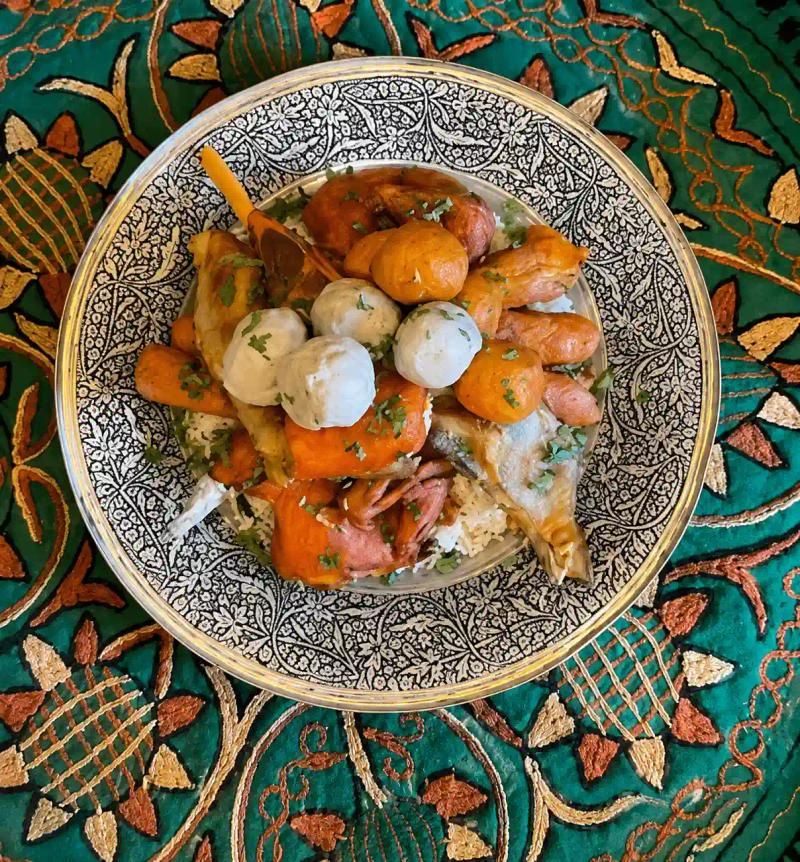
Rista and Gushtaba are usually considered the two dishes that mark the beginning and end of a formal Wazwan meal, so if you only try two things, make it those.
Wazwan Dining Etiquette
How Do You Eat Kashmiri Wazwan the Right Way?
Short answer: Wazwan is eaten seated on the floor in groups of four, sharing one large trami, using your right hand instead of cutlery. Rice is served as the base for every course, and it's considered polite to pace yourself rather than finish each dish completely, since more courses will keep arriving.
A few habits go a long way toward not standing out as a first-timer:
- Wash your hands before and after, since a bowl and water jug are typically passed around for exactly this.
- Eat with your right hand only, following general South Asian dining etiquette.
- Don't rush — a full Wazwan can take two to three hours to serve properly.
- Leave a little food on your plate at the end; finishing everything can be read as a sign the portions weren't enough.
- Follow your host's lead on when a new course "starts," since the platter is topped up gradually rather than replaced.
Wazwan vs Everyday Kashmiri Food
It's a common mix-up: not every Kashmiri meal is Wazwan, and most locals don't eat Wazwan-style spreads daily. Here's how they compare:
| 📌 Aspect | 🍽️ Wazwan | 🏡 Everyday Kashmiri Food |
|---|---|---|
| Occasion | Weddings, special events | Daily meals |
| Number of Dishes | 15–36 courses | 2–4 dishes |
| Preparation Time | Hours, sometimes overnight | 30–60 minutes |
| Setting | Communal trami, floor seating | Regular table or floor, individual plates |
| Cost | Higher, often catered | Everyday household budget |
If you're staying with a homestay or on a longer trip through the valley, you're far more likely to encounter dishes like haak (a simple leafy green stir-fry), nadru yakhni (lotus stem in curd gravy), or dum aloo on a regular basis, rather than a full Wazwan spread.
Where to Eat Wazwan in Kashmir
Can Tourists Eat Wazwan Without Attending a Wedding?
Short answer: Yes. Several established restaurants and catering houses in Srinagar now serve scaled-down Wazwan meals specifically for tourists, usually with 7 to 12 courses instead of the full ceremonial spread, and often bookable in advance for groups.
If you're wondering where to eat in Kashmir for an authentic experience, Srinagar is your best base — most reputable Wazwan restaurants and catering families are concentrated there, and it also happens to be where most Kashmir itineraries start and end. If you're staying on a houseboat, many operators can arrange a private Wazwan dinner right on Dal Lake, which is genuinely one of the more memorable ways to experience it. Our guide on Dal Lake Kashmir Tour Packages covers houseboat stays where this kind of dining experience is often included or easy to arrange.
If your trip includes Pahalgam, smaller local eateries there serve simplified Kashmiri thalis that give you a taste of the same flavors without the full Wazwan commitment — worth checking out alongside the sightseeing covered in our Pahalgam Tourism Guide.
Vegetarian Options in Kashmiri Cuisine
Wazwan itself is almost entirely meat-based, but Kashmiri cuisine as a whole has a strong vegetarian side that often gets overlooked.
- Dum Aloo — baby potatoes cooked in a rich, spiced yogurt gravy
- Haak — a simple, slightly bitter leafy green, cooked with minimal spice
- Nadru Yakhni — lotus stem in a curd-based gravy, similar in style to the meat version
- Modur Pulao — a mildly sweet rice dish with dried fruits, often served at festive meals
- Kashmiri Dal — lentils cooked with a distinct blend of local spices
If you're traveling with vegetarian family members, it's worth mentioning this in advance to your homestay or tour operator so they can plan meals accordingly — most kitchens in the valley are used to accommodating this without any issue.
Best Time to Experience Kashmiri Food Culture
Food itself isn't seasonal in the way sightseeing is, but a few times of year make the experience noticeably better.
Wedding season, which typically runs through late spring and early autumn, is when you're most likely to catch an authentic large-scale Wazwan happening nearby, even if you're not personally invited (locals are often more welcoming to curious travelers than you'd expect). Our Kashmir in September guide covers this window well, since it overlaps with pleasant weather too.
For general travel planning around weather and crowd levels, our Best Time to Visit Kashmir guide is a useful companion to this one, especially if food is just one part of a bigger itinerary.
Budget for a Wazwan Meal
Pricing varies a fair bit depending on whether you're eating at a restaurant, booking a private catered meal, or attending as a wedding guest.
If you're traveling on a tighter budget, it's completely reasonable to try a smaller restaurant version rather than a full private booking — the flavors are the same, just fewer courses. Our Budget Kashmir Tour Package guide has more on stretching your overall trip budget without cutting corners on experiences like this one.
Common Mistakes First-Timers Make
- Filling up on the first few courses and having no room left when Rista and Gushtaba arrive — pace yourself from the start.
- Assuming every Kashmiri restaurant serves full Wazwan — many serve everyday Kashmiri food instead, which is worth trying too, just different.
- Not booking ahead for a proper Wazwan dinner, especially on a houseboat, since it usually needs advance notice for the cooking process.
- Skipping the vegetarian dishes entirely, assuming Kashmiri food is all meat-based — the vegetarian side is worth exploring on its own.
- Eating with the left hand without realizing it's considered impolite in this dining tradition.
Local Insights and Practical Tips
- Ask your host or restaurant which dishes are "must-try" for that specific meal — every waza has signature dishes they're known for.
- If you're on a full Kashmir itinerary, it's worth planning ahead rather than trying to fit a Wazwan dinner in last minute — our Kashmir Trip Planning guide can help you build this into your schedule properly.
- For honeymooners, a private Wazwan dinner arranged on a houseboat is one of the more romantic add-ons available — worth checking with your operator when booking through our Kashmir Honeymoon Package.
- A good local tour operator can often arrange direct access to reputable Wazwan caterers rather than tourist-facing restaurants alone — our guide on How to Choose Tour Operator Kashmir walks through what separates a good operator from an average one.
- Portion sizes are generous; it's genuinely fine to leave food on your plate rather than forcing yourself to finish each course.
Related Travel Guides
Planning your Kashmir trip works best when you look at it alongside the rest of the Xogul Kashmir travel journal:
Conclusion
Kashmiri Wazwan is one of those experiences that's easy to read about but genuinely needs to be sat through, plate by plate, to understand. It's slow, communal, and built around generations of craft that most travelers never get to see up close elsewhere in India. Whether you catch a full ceremonial spread or a scaled-down restaurant version in Srinagar, it's worth building into your itinerary rather than treating as an afterthought.
If you're planning your trip around this and other experiences, our Places to Visit in Kashmir guide pairs well with this one, and depending on where you're flying in from, our tour packages from Delhi , Mumbai , Bangalore can help you get the logistics sorted.
Contact Us
Planning a Kashmir trip and want food to be part of the experience, not an afterthought? Xogul has years of hands-on experience organizing Kashmir tours, and that includes arranging authentic Wazwan dinners with trusted local caterers — not generic tourist setups. Our local travel experts put together customized Kashmir tour packages with the best prices, trusted service, and easy, hassle-free booking.
Whether you want a private Wazwan dinner on a Dal Lake houseboat, a food-focused Srinagar itinerary, or a fully personalized itinerary built around your interests and budget, our team is ready to help.


